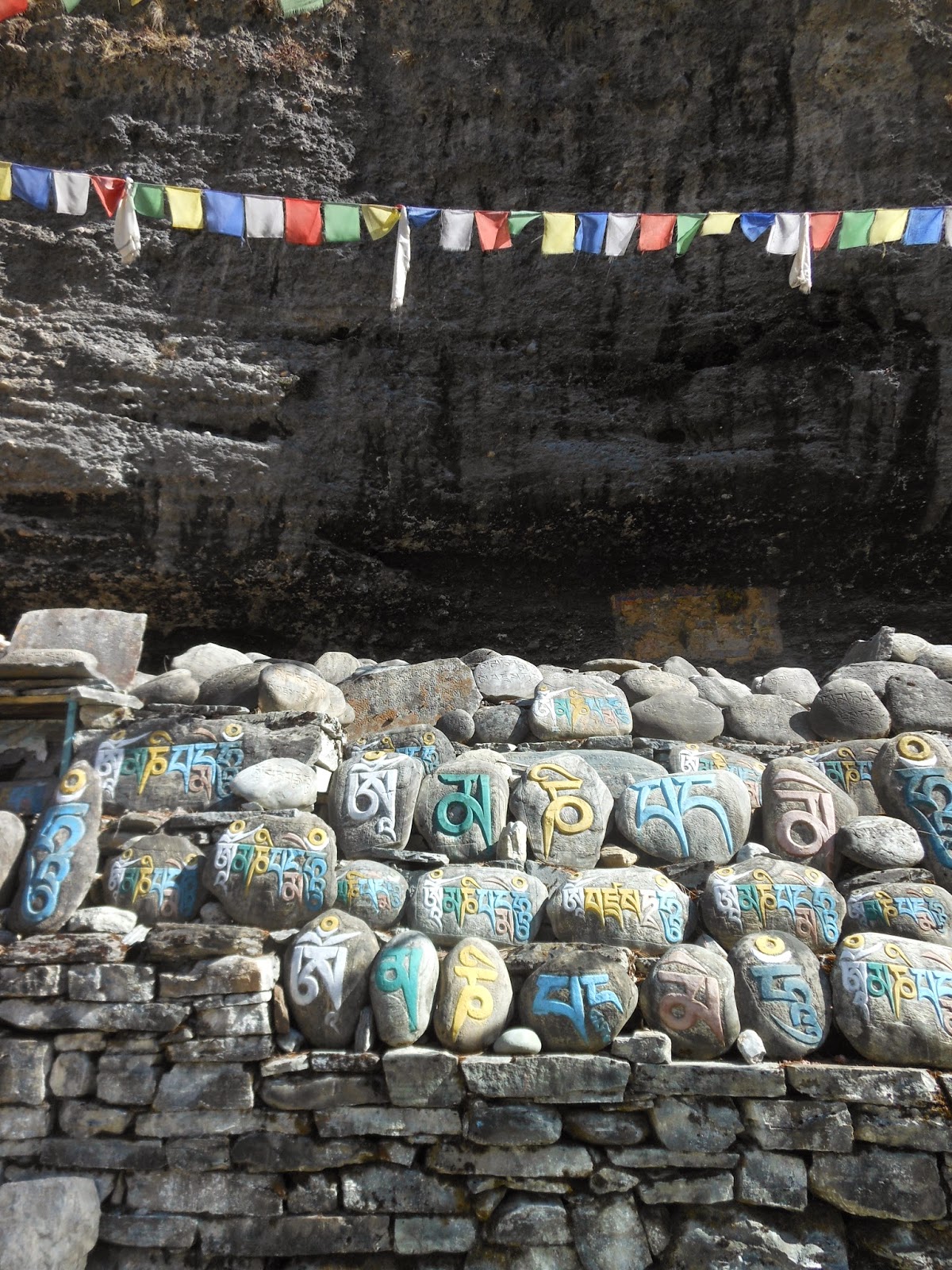
Separated only (only?!) by 10 hours of bumpy bus travel and 5 sweaty hours on a train, the 500 odd kilometres between Kathmandu and Varanasi is actually a journey between worlds (but you can be forgiven for not knowing this).
Kathmandu sprawls in a valley surrounded by mountains. It is dry- I saw one river but when I say river I mean a wide ditch with a small pool of dirty water that the locals use as a rubbish dump.
There are temples, of course- this is Asia after all. They are dotted about the city, stone figures living forever in niches and corners and where ever there are bodhi trees. They are convenient. As they pass by, with the fluidity of years of practice, locals will ring the bells, light the candles and smear the colour; choreographed moves of a theological dance.

There are bigger, more celebrated temples too...there is one at the top of a hundred stairs, where monkeys live on ice-cream, fairy floss and stolen bananas.


Then there is Durbar Square, Kathmandu's pride and joy and a pretty interesting place to wander around. One of the nicest places in the city; where you can sit on the steps of centuries old temples and watch toddlers tentatively running through clouds of pigeons, giggling and screaming; admire the amazing haircuts of the city's youth as they pose for selfies with their friends, framed by black and red; watch tourists mingle with praying locals and men wandering around plying their wares to the masses.

Our arrival here accidently coincided with the Nepalese New Year (actually this was the reason we spent so long here...intending to be heading to India, visas in hand, 2 days after arriving in the city we got off the bus to find the offices all closed for the 4 day holiday). So Harry's last day found us sitting in a heaving Durbar Square, all of the city (it seemed) turned out and looking sharp, in order to greet 2071.

Kathmandu is a dirty, dusty, welcomingly chaotic city. You go to the post office, organise beaurocracy and GET THINGS DONE. Busy and functioning; almost like London in its faceless hordes pounding the pavement with single-minded intent but here the pavement is made out of dirt and potholes and the soundtrack is shouting and blaring horns and the people are colourful. And there are dogs and goats and monkeys.

Varanasi is unlike London in every conceivable way. It is unlike everywhere in every conceivable way. Getting things done? Not in Varanasi. It is perched on the bank of the Ganges and, while the city and its mess of honking, mooing, screeching, shouting inhabitants sprawl- Asian cities just do, they just sprawl- up out and beyond the river, this is really where it is. This is the place that turns your complaints about how loud dirty in your face insane Indian cities are into a dropped jaw and an 'ohhhh myyyyy ggggg.....' Pertinently put, it's the place that makes a visit worthwhile.


The river is god here. But then, so is almost everything else...monkeys, cows, blue, bendy, many limbed people. It's the river we are all here for though. If you want to wash your clothes, wash yourself, learn to swim, do some praying, sell a boat tour, meet with friends, pay your respects and cremate a family member, have a chai or some freshly roasted peanuts, play cricket, fly a kite, beg, meditate, sleep...go to the ghats of Varanasi. For Hindus, to die in Varanasi is to escape the (I imagine) frustrating cycles of death and rebirth; it is a site of incredible religious importance and spiritual cleansing. Secularly, it is so polluted that it is poised on the brink of death itself. Human waste (an estimated 3 billion litres dumped daily), industrial waste, crematorium waste and household waste (check this out: http://www.dw.de/indias-polluted-ganges-river-threatens-peoples-livelihoods/a-17237276 )...all of these find their way into the great Mother Ganga. Seem confusing? Welcome to India.

The steps leading down to the river are a platform that support hundreds of temples, huge and tiny and every other size, and the braided alleys of the old city hide many more. We went walking around these shaded twists and winds one morning to escape the heat and as it was early they were completely deserted. The odd cow and a few mangy dogs and us. Occasionally, though, we would round a corner and be in the middle of a sudden burst of vendors selling trinkets and garlands of flowers, families hustling to and fro, people waiting expectantly at lockers, sweet sellers and chai wallahs working hard on a Sunday morning. Then we would walk a little further into the melee and spot a darkened entrance leading into the bright orange heart of a temple and the reason for all the activity. And the next corner we took would bring deserted lanes once more, so quiet it was as if the bustle of worship we just saw was a heat-induced hallucination.
You don't have to do anything in Varanasi- although the hundreds of boatmen and various other "tour guides" will try to convince you otherwise- other than wander along the ghats and wait to be shocked or amused or incensed. It won't take long. While you're waiting you can admire the soft pink of the crumbling buildings lining the water, the occasional flashes of bright orange signifying a temple, the reds and blues and greens of the wooden boats floating patiently on the water, waiting to be useful, the cheerful brightness of the fabric stretched out on the concrete to dry and the intricate artwork painted on the concrete walls.
There is nothing utalitarian about Varanasi. It feels as if the whole place exists just to excite gasps of shock or disbelief from even the most world-weary travelers. A place that has been the same forever and will go on staying the same, unbothered by the world around it, forever. But it is a living city also, there is no doubt about that. It is tangibly alive and every aspect of humanity is on show.


Kathmandu sprawls in a valley surrounded by mountains. It is dry- I saw one river but when I say river I mean a wide ditch with a small pool of dirty water that the locals use as a rubbish dump.
There are temples, of course- this is Asia after all. They are dotted about the city, stone figures living forever in niches and corners and where ever there are bodhi trees. They are convenient. As they pass by, with the fluidity of years of practice, locals will ring the bells, light the candles and smear the colour; choreographed moves of a theological dance.
There are bigger, more celebrated temples too...there is one at the top of a hundred stairs, where monkeys live on ice-cream, fairy floss and stolen bananas.
Then there is Durbar Square, Kathmandu's pride and joy and a pretty interesting place to wander around. One of the nicest places in the city; where you can sit on the steps of centuries old temples and watch toddlers tentatively running through clouds of pigeons, giggling and screaming; admire the amazing haircuts of the city's youth as they pose for selfies with their friends, framed by black and red; watch tourists mingle with praying locals and men wandering around plying their wares to the masses.
Our arrival here accidently coincided with the Nepalese New Year (actually this was the reason we spent so long here...intending to be heading to India, visas in hand, 2 days after arriving in the city we got off the bus to find the offices all closed for the 4 day holiday). So Harry's last day found us sitting in a heaving Durbar Square, all of the city (it seemed) turned out and looking sharp, in order to greet 2071.
One of the arms leading into Durbar Square is Freak Street. The enclave of the hippies of the 60's and 70's, it is now a fairly sleepy street with a few guesthouses and a couple of western cafes and lots of locals going about their business. A place to sip chai under the stairs in a darkened local momo house and organic (what else?) coffee amongst pretentious neo-hippies on the steps of a tiny little cafe.
Varanasi is unlike London in every conceivable way. It is unlike everywhere in every conceivable way. Getting things done? Not in Varanasi. It is perched on the bank of the Ganges and, while the city and its mess of honking, mooing, screeching, shouting inhabitants sprawl- Asian cities just do, they just sprawl- up out and beyond the river, this is really where it is. This is the place that turns your complaints about how loud dirty in your face insane Indian cities are into a dropped jaw and an 'ohhhh myyyyy ggggg.....' Pertinently put, it's the place that makes a visit worthwhile.
The river is god here. But then, so is almost everything else...monkeys, cows, blue, bendy, many limbed people. It's the river we are all here for though. If you want to wash your clothes, wash yourself, learn to swim, do some praying, sell a boat tour, meet with friends, pay your respects and cremate a family member, have a chai or some freshly roasted peanuts, play cricket, fly a kite, beg, meditate, sleep...go to the ghats of Varanasi. For Hindus, to die in Varanasi is to escape the (I imagine) frustrating cycles of death and rebirth; it is a site of incredible religious importance and spiritual cleansing. Secularly, it is so polluted that it is poised on the brink of death itself. Human waste (an estimated 3 billion litres dumped daily), industrial waste, crematorium waste and household waste (check this out: http://www.dw.de/indias-polluted-ganges-river-threatens-peoples-livelihoods/a-17237276 )...all of these find their way into the great Mother Ganga. Seem confusing? Welcome to India.
The steps leading down to the river are a platform that support hundreds of temples, huge and tiny and every other size, and the braided alleys of the old city hide many more. We went walking around these shaded twists and winds one morning to escape the heat and as it was early they were completely deserted. The odd cow and a few mangy dogs and us. Occasionally, though, we would round a corner and be in the middle of a sudden burst of vendors selling trinkets and garlands of flowers, families hustling to and fro, people waiting expectantly at lockers, sweet sellers and chai wallahs working hard on a Sunday morning. Then we would walk a little further into the melee and spot a darkened entrance leading into the bright orange heart of a temple and the reason for all the activity. And the next corner we took would bring deserted lanes once more, so quiet it was as if the bustle of worship we just saw was a heat-induced hallucination.
You don't have to do anything in Varanasi- although the hundreds of boatmen and various other "tour guides" will try to convince you otherwise- other than wander along the ghats and wait to be shocked or amused or incensed. It won't take long. While you're waiting you can admire the soft pink of the crumbling buildings lining the water, the occasional flashes of bright orange signifying a temple, the reds and blues and greens of the wooden boats floating patiently on the water, waiting to be useful, the cheerful brightness of the fabric stretched out on the concrete to dry and the intricate artwork painted on the concrete walls.
There is nothing utalitarian about Varanasi. It feels as if the whole place exists just to excite gasps of shock or disbelief from even the most world-weary travelers. A place that has been the same forever and will go on staying the same, unbothered by the world around it, forever. But it is a living city also, there is no doubt about that. It is tangibly alive and every aspect of humanity is on show.